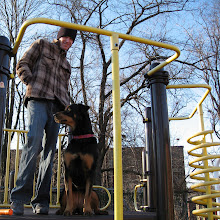
interview with
john hanks
by asimplesound
where are you from and how did you get here?
Hi, to everyone that is checking this out. I feel very lucky to get to do what I do, so thanks again for supporting our music.
I was born and raised, and still live, in Durham, North Carolina. My Dad taught voice (Classical, Opera) in the Duke University Music Department, and Mom, who was an aspiring actress before WWII, came from a musical family, so I was exposed to Western artistic culture from an early age. I started snare drum lessons at 7 and started playing orchestral music when I was about 12 years old. Soon after that I got my first drumset and was bitten by the Jazz and Rock bug. College at a few schools ensued, including studies with many wonderful, influential teachers. After graduation, I happened onto a job with a regional dance company (Frank Holder) and traveled with them for 2 years. That was my first experience playing for dancers, and it seemed like a natural thing to do, as I had always enjoyed improvisation. So, I'm still playing for dance today, and many other things, some - ahem - 27 years later. I knew from an early age that I was going to be a musician, and this is where I am with it now.
how have your choices, of the instruments you use for playing class, changed since you first began accompanying?
For my first job with the Frank Holder company, I played drumset and a large, eclectic multi-percussion set-up for two concert pieces. At that time, I had no hand drum experience, so I also used drumset for company class. Drumset was and still is one of my main gigging instruments, and I've used different forms of it as my primary dance instrument since then, too. My concept, as I've been able to understand it, is to treat it as a Chamber Music multi-percussion instrument, in addition to it's traditional Jazz and Pop uses. My studies and performances of classical and contemporary music have been a big influence on how I envision my accompaniment. A good groove is primary, but being able to flavor the music with other elements has been just as important. It makes it interesting to listen to (hopefully) and fun to do.
The first big change was when I started using a DrumKat MIDI controller in the 1980's. I still use it today. I had always been into electronic music since college (my first pieces used the Arp2600, Korg MS-20 and SQ-10, and 2 Revox reel to reel 1/2 track machines w/pitch control.) The DrumKat became my dance accompaniment "schtick" and gave me an expressive vehicle for playing class that was fairly unique at the time. Now, electronics in class are more widespread, and in many different forms, so I've gone back to using my acoustic instruments most of the time. Electronic percussion allows me to bring a truck load of sounds to a class, but their individual aural transients, at least for most of the equipment I have, al
 ways remain the same, whereas, acoustic percussion, even one drum, has an endless number of sounds that can be drawn from it. It's sonic essence is vastly more interesting to listen to over a long period of time. They both have their uses, but for long term use (like a school semester) I would prefer acoustic instruments now.
The biggest recent change has been how much I play piano now. I had always played piano as a secondary instrument, but I've never gotten past an intermediate technical level. But, with my experience at playing for class, my ear for classical music, plus an encouraging teacher, I started playing piano for Ballet classes at Duke University in the 1990's. Now,for better or worse, it is at least 50% of what I do.
talk about one of the first "really great" classes you played for.
That's hard to answer, probably because I don't remember. I think it would easier to relate that each class/teacher gave me a new level of understanding about what I do (or couldn't do, as the case may have been). My biggest mentor has been  Clay Taliaferro, who I have been lucky to work with since the 1980's. He gives the most incredibly deep movement exercises, and the musician has to be equal to the task. This is not music as wallpaper, but music and dance inextricably tied together as it moves through time. The musician must approach his classes with at least the same passion Clay is expecting from his students. My time with him raised my movement comprehension, and also my confidence. No one else has been as difficult, challenging and rewarding to play for.
I have also had a certain amount of success playing for Jazz dance, but mostly for what might be called "old school" teachers. Some (not all) of these classes use recorded music exclusively, and may have an additional commerciallity that some may find antithetical to Modern dance sensibilities. Whatever. If they want to hire me for good money, I'll give it a shot! My first job at ADF was playing for Jazz dance classes taught by Bruce Taylor. This was an Ailey style class you could set your watch to, 3 times a day, 5 days a week for 6 weeks. I returned to ADF several years later and was honored to work with the great Alvin McDuffie. A side note is that ADF always looked at me as the "local" musician, which I was of course, but it also meant "you're not from out of town, so if we need you, we'll let you know". But when Alvin returned the next summer, he specifically requested me for his classes, so that changed many things for me at ADF. This also happened with some other Jazz teachers, Jose Meier, Bernard Johnson, and Gus Giordano for his Jazz Dance World Congress. It was during this time that I developed my DrumKat and MIDI skills, too. So, a lot of things came together at that time that made many classes "really great".
So as far as a "really great" class, there isn't one I would point out. It's always been more about my long-term relationship with the teacher and the class. Maybe, I could say that playing piano for Betty Jones' classes was "great," at least for me. I found that my lack of advanced chops was an advantage when playing for her lower level ADF classes because I kept things simple and easy to hear, not being able to fly away with bravura passages and such. Oh, and th en there was the time I had my DrumKat in her class, one of the first ones I ever played for her. If you know Betty, you'll also know that using electronics in her class might seem strange. But there I was, a little nervous as I tried to do my best in a new situation. I was using a Roland R8-M sound module at the time which accepts a series of expander cards. I had just inserted a new card as she was counting off the exercise. When I hit the pads the most incredible, indescribable, loud electronic distortion imaginable blasted from the speaker - the card had misread. I mean, I was nervous anyway playing for Betty at that time, but she actually scolded the class and told them to keep dancing no matter what. It was a great lesson for me, too.
have you taken any dance classes in your life?
Not really. I took a semester of a floor barre with Clay Taliaferro (derived from his studies with Zena Rommett), but that's about it. But even that class, besides being incredibly strengthening, increased my awareness and empathy for the physicality involved in classical dance technique.
what is your favorite aspect about music and musicians in north carolina?
I like the variety of musical situations I am able to play in, but this is not necessarily unique to N.C.
describe what a summer playing for the american dance festival is like for you?
ADF, believe or not, is like a vacation. After working at Duke U. all year with a bunch of future doctor/lawyer/indian chiefs that are afraid to move or speak up in class because they might get it "wrong" (or, is that a problem at every school?), it's great to see the campus transformed into a place for dance and artistic expression. Yes, it's incredibly hot (global warming or not, it's always been hot here) but that's just part of the deal. Now, if it were somewhere else that was a little cooler, it wouldn't break my heart.
what are you working on now and in the near future?
I have a couple of pieces I'm preparing for our spring Choreolab concert at Duke. One is a recorded composition that features amplified berimbau for a ballet, "String Theory", choreographed by Tyler Walters, and the other is a live duo with saxophonist Mahlon Hoard, who recently returned to NYC after a brief hiatus in NC. That piece is called "Pieces of Clay", and is a restaging/remix by Duke faculty member Keval Khalsa of choreography from several works by Clay Taliaferro. In addition, I am also drummer for the North Carolina Jazz Repertory Orchestra and we have several great concerts coming up including the World Premiere of Composer Todd Hershberger's "Concerto for Free Improvising Alto Saxophonist and Jazz Orchestra" featuring saxophonist Frank Gratkowski. And we will also be doing a retrospective of arrangements/composition by Mary Lou Williams. I am also hoping to produce a new CD of dance music, perhaps with Khalid Saleem, who has been a great friend and inspiration for so many years, so stay tuned.
www.drumjazz.com
 "mde 2 differs from mde 1. while keeping the concept of long cuts we enjoyed setting or composing more of the pieces on mde 2. chords, number of bars per section and entrances were more likely to be set before recording. tempos stay the same throughout the tracks just like mde 1 but there are more distinct sections with improvisation set apart from the rest of the ensemble similar to a jazz or rock tune as opposed to it being the essence of the piece as on many of the mde 1 tracks. almost all of the compositions on mde 2 were written and performed live in dance concerts before being recorded. there are more musicians added to our ensemble as well. steve grom: 12 string guitar, electric guitar and composer (seascape), bob mehren: guitars, bob ose: tom toms, bass drum, percussion, percussion toys, treble trombone and conga. also kenny sawhill appears on "music for slit drum" on bass trombone and bass synth and rolan tripp plays the slit drum. i have to mention geoff cooper who was involved in the recording of both mde cd's. geoff was sound man at nbc-tv channel 4 in burbank and ran dbcoopers (vinyl) . recording credits also go to craig kupka and bob ose. all tracks were originally recorded on a teac four track between 1980 and 1983 and originally offered in vinyl."